

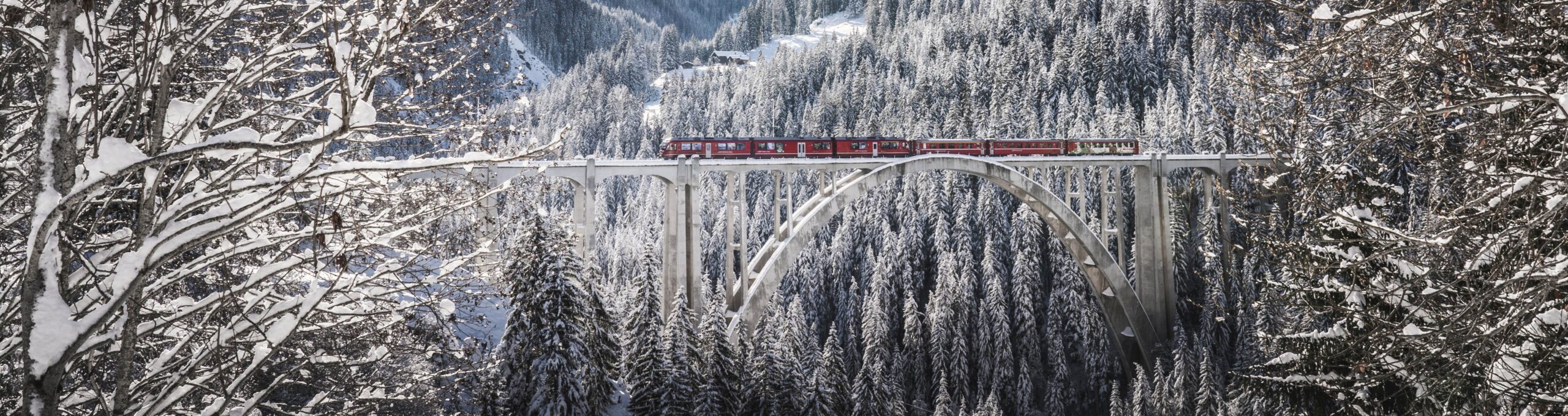
 All Aboard: Less Carbon, More Fun
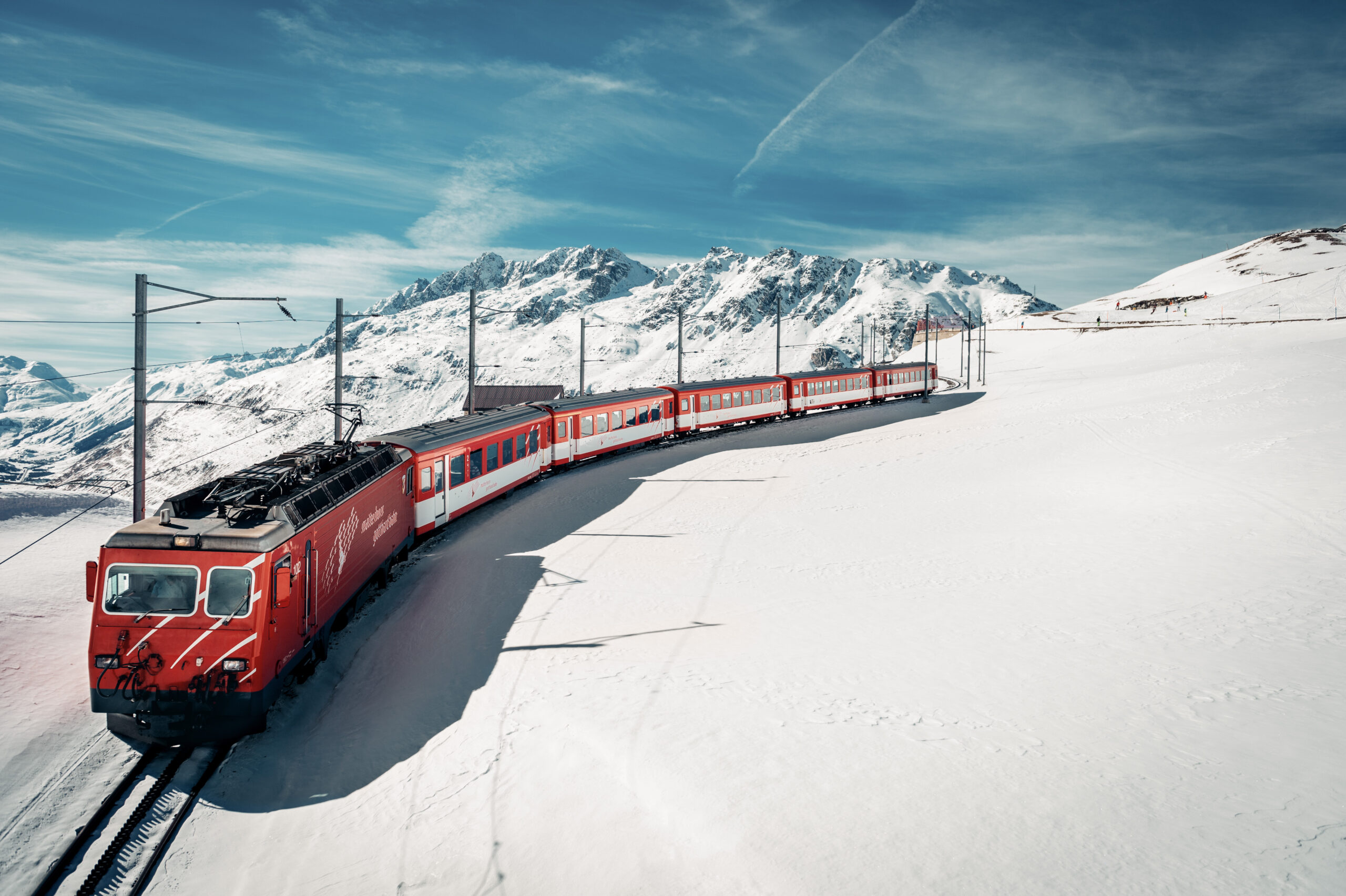
For many British riders, getting to the Alps is part of the holiday we’d rather forget. Airport queues, baggage charges, hire cars, snow chains, airport transfers and gridlocked mountain motorways. Sometimes the journey feels harder than cutting the booter on the Brèche de la Portetta.
But what if there was another way?
We caught up with Daniel Elkan, founder of Snowcarbon, to explore an alternative many British riders rarely consider: travelling to the mountains by train. Daniel has made it his mission to help us discover the possibilities of rail travel to European ski resorts. He’s also the brains behind the excellent Rail-Ski maps of France and Austria, produced in collaboration with graphic designer David Cooper. They’re so good they deserve a frame on the wall of your mountain lodge (if you have one).
Is it really practical? How long does it take? What about the skis, boots and all the other gear we insist on taking? And could the journey itself become part of the adventure?
We got Daniel on board to find out.
The man behind Snow Carbon.
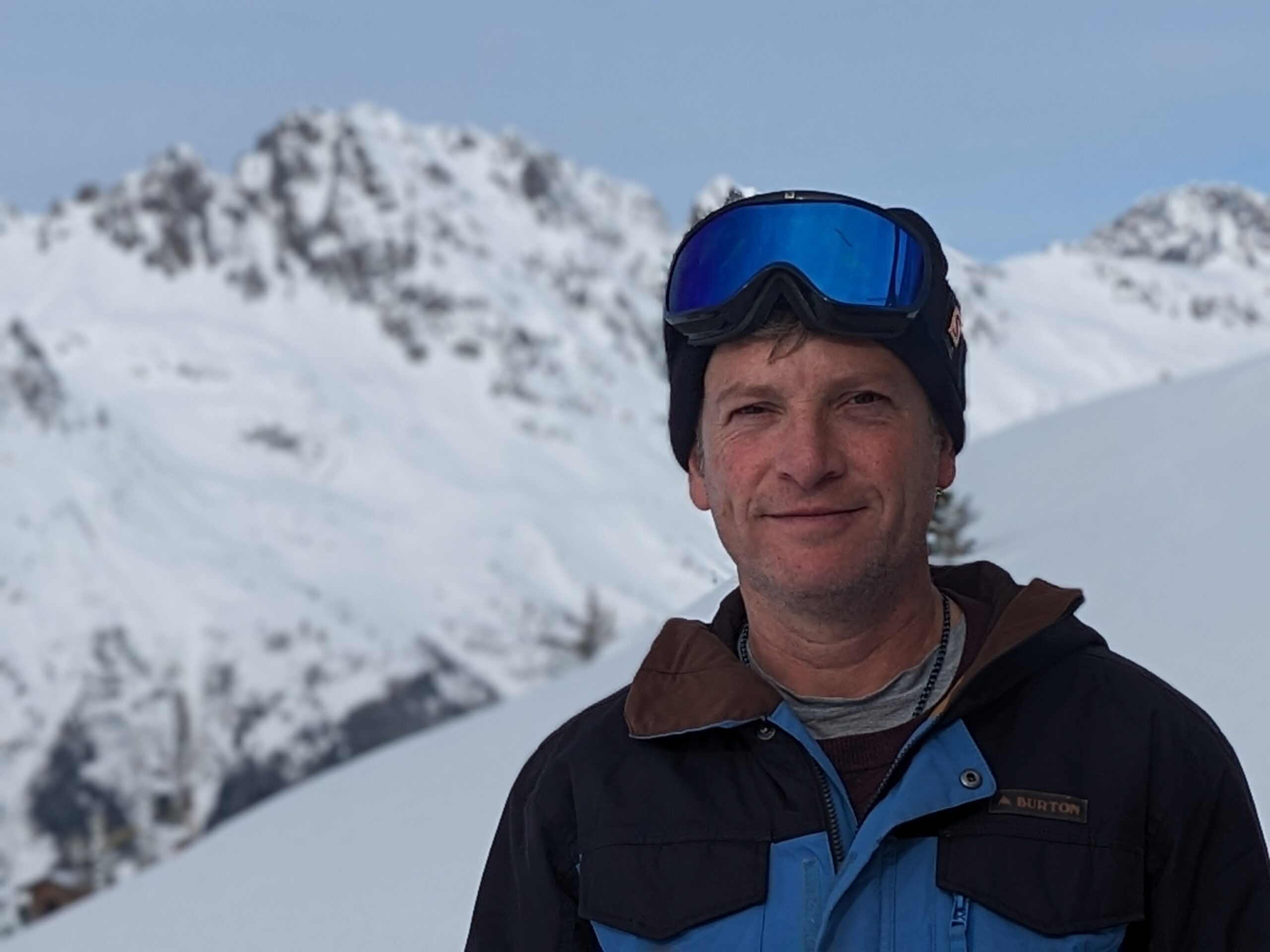
Are you a FreeRider?
I’m a boarder and I love riding off-piste, though the wilder stuff I’ll usually do with a guide.
Favourite ride?
I’ve had the same second-hand Burton for about ten years; last season I decided that, as I can get a comp rental on writing trips, it’s easier to rent. I don’t know enough about boards to have a favourite.
Favourite run?
Mont Chéry in Les Gets. There’s an unwritten rule in ski culture that the best, most untouched powder is found at the top of a resort’s oldest, slowest ski lifts. Mont Chéry proves that rule.
Home mountain?
I don’t have one, but I lived in Japan for a couple of years and, in the parallel universe in my head, Hokkaido is my home mountain. You never ask ‘Did it snow?’ there. Only, ‘How deep was it?’
How many days a year do you get out on the snow?
Never as many as I’d like.
Do you own your own transceiver, shovel and probe?
You’re not going to like this but, truthfully, the answer is no I don’t. But when off-piste with a guide I’ll be given a set.
When did you last practise an avalanche rescue?
Ages ago with the Ski Club of Great Britain, when I was one of their reps.
FreeRide Republic: We’re not here to judge, Daniel, but if you’re heading off-piste, we strongly recommend you carry your own TSP, know how to use them and practise regularly.
Snowcarbon is your baby.
How did it all start?
My first ski trip in my twenties involved a tortuous, mind-numbing 12-hour door-to-door journey by plane and transfer to Andorra, followed by a similarly arduous trip to Italy.
I didn’t know any better until I noticed a railway track right below our resort. When I got home, out of curiosity, I dusted off my old inter-rail timetable and discovered we could have made exactly the same journey from the UK with just two train changes.
I offered to organise our next ski trip – just so I could make sure we went by train. Everyone loved the train – it was a bonding moment and felt like more of an adventure. A few years later, I wrote a 1,200-word article for The Guardian Travel Desk, along with pieces for ski magazines, and eventually launched Snowcarbon in 2009 with funding from ski resort tourist offices.
You’ve personally travelled to more than 50 European ski resorts by train. What have you learned?
Every one of those journeys has reinforced my experience that train travel isn’t just a realistic alternative to flying. It’s a much more enjoyable, social and fun way to get there.
The problem isn’t the journey; it’s the planning. Train operators are notoriously poor at communicating schedules well in advance, so we built our own hand-researched Journey Planner. It’s free to use, although you still need to book tickets directly with the rail companies, and is supported by our Your Stories community, where skiers have been sharing real-world tips and feedback since 2011.
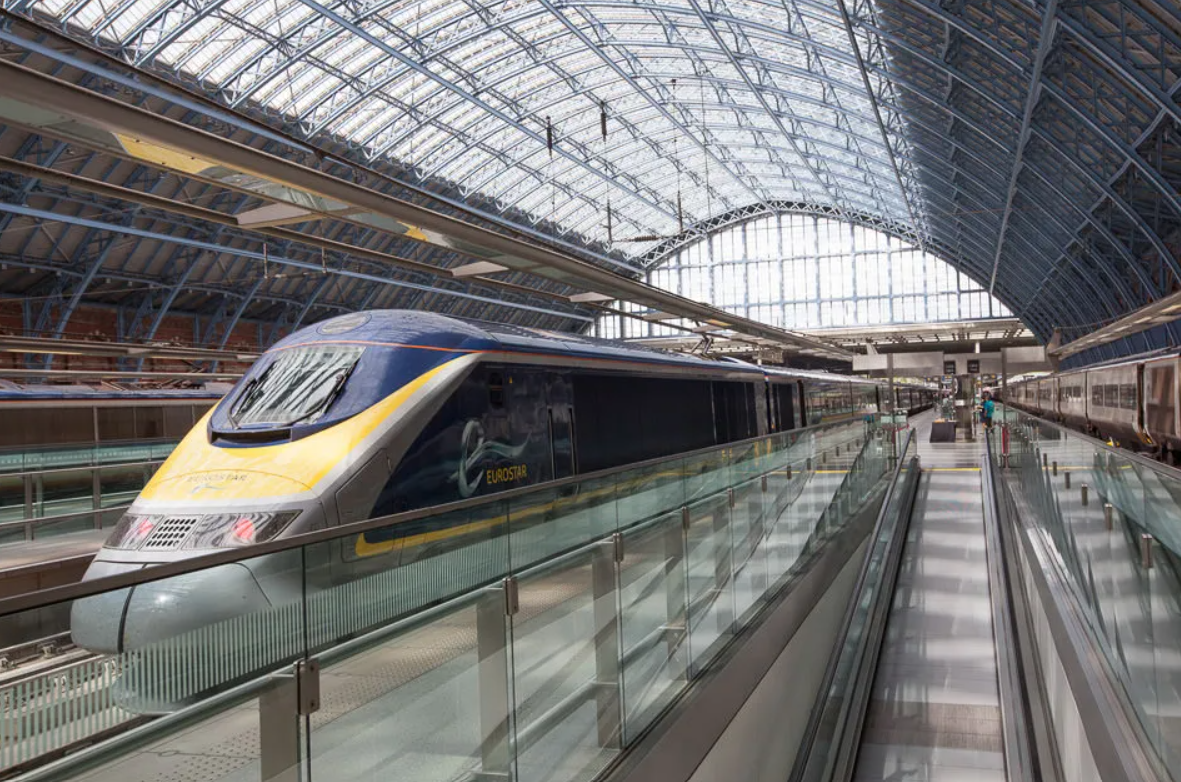
What happened to the direct Eurostar ski train? Could it ever return?
The old direct ski train to Moûtiers, Aime-La-Plagne and Bourg-Saint-Maurice used to sell out within two hours, so the demand was definitely there. Unfortunately, it stopped during COVID-19 and was permanently cancelled.
Snowcarbon, Ski Flight Free, Protect Our Winters and 160 resorts and operators petitioned Eurostar to keep it running, but they declined for commercial and logistical reasons.
It would be great if Eurostar – or a future train operator – brought back a single direct train from London to the Alps. But what also needs to happen is more simple connections at key interchanges like Lille and Brussels, to make things super-easy.
Can you really ditch the plane or car without making life unnecessarily complicated?
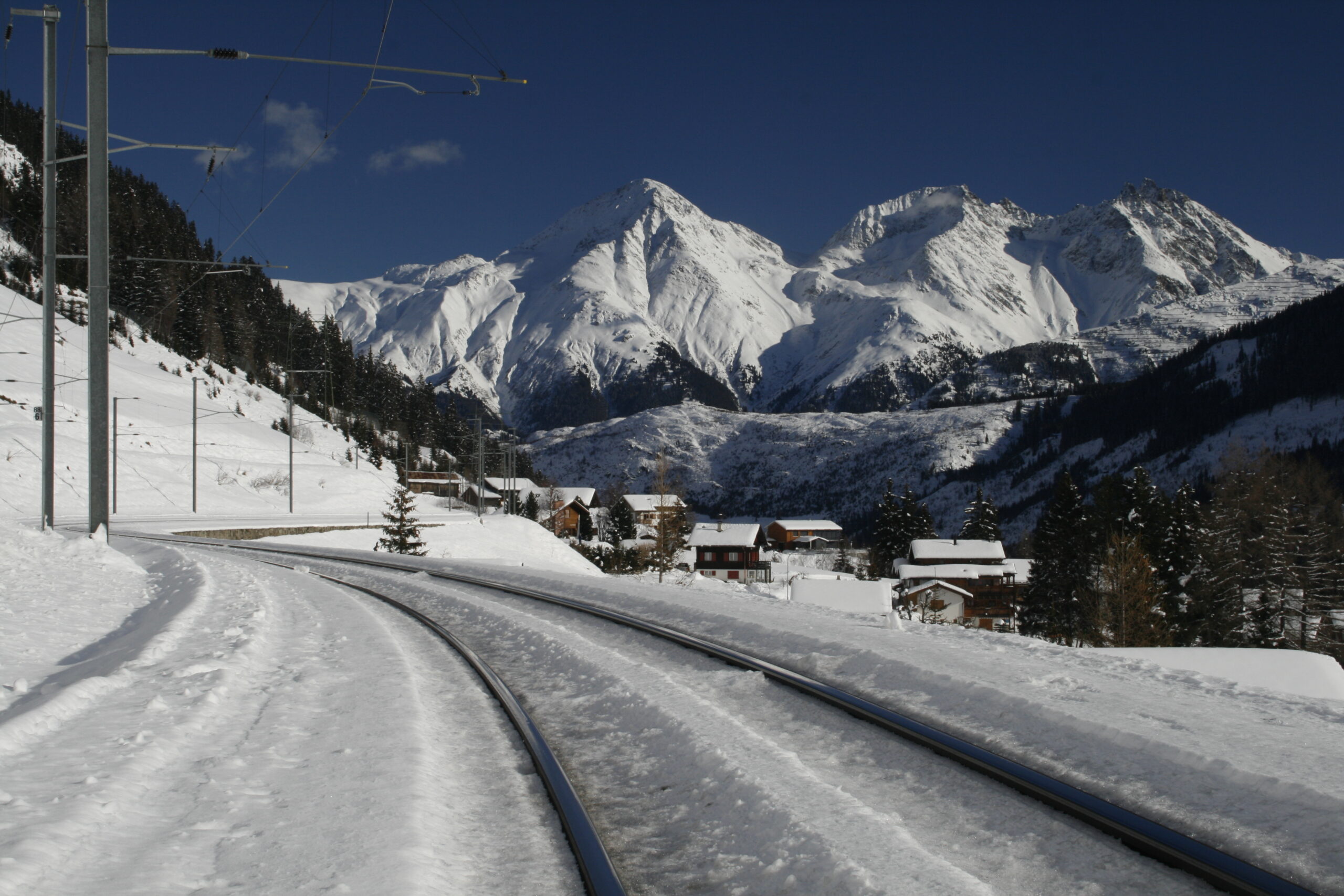
Where can you realistically get to by train?
Almost every European ski resort is accessible, usually via Paris, Lille or Brussels.
You can reach the French Alps via Eurostar and TGV in six to nine hours, northern Italy via TGV, and Andorra via an overnight sleeper from Paris.
Austria is easily reached via Brussels or Paris using Nightjet sleeper trains to Innsbruck or Salzburg, or via Zurich to St. Anton. Even in Switzerland, where routes sometimes require a few more changes, connections are clockwork-precise, often with adjacent platforms, so connections might look tight on paper but in reality couldn’t be simpler.
Is changing trains in Paris as daunting as people imagine?
With a little advance planning, not at all. Allow plenty of time so there’s no pressure, and stay calm. Station signage has improved massively, and you can sort your metro tickets in advance using the Navigo app.
If you’re carrying heavy gear or travelling in a group, you could also use the taxi ranks or pre-book an Uber across town.
Does travelling by train really take so much longer when you factor in the whole journey?
If you live in London with easy access to St Pancras, door-to-door times to places like the Tarentaise are very comparable to flying, particularly when you factor in security checks, passport control, baggage reclaim and airport transfers, not to mention border crossings and the dreaded feux de régulation on the RN90 that can extend total journey times from Geneva by as much as nine hours if you’re unlucky.
FreeRide Republic: We did a quick office straw poll. Our longest airport transfer from Geneva to Les Trois Vallées was 12 hours.
Back in 2011, I did a Top Gear-style race to Méribel against ski journalist Neil English. He beat me, arriving triumphant, frazzled, hungry and totally knackered. I arrived 35 minutes later, rested, well-fed, mildly disappointed at second place, but ready to hit the slopes. I’d even made a few friends along the way. Neil won the race but I reckon I won the journey. He can’t bring himself to admit it, but deep down inside, I’m quietly confident Neil agrees with me.
If you’re travelling to St Pancras from Scotland, Wales or Cornwall for example, of course it does take longer. But in travel we’ve fetishized speed and then mistakenly equate faster with better. On a train, the quality of the journey is infinitely higher.
And what about the cost?
Cost isn’t the barrier people think it is. In peak weeks like half-term, a one-way easyJet flight from Geneva can hit £800 before you’ve even paid for a pricey private transfer. You can travel return from London by train for £500 – £800 on peak dates, and about £250 – £350 return on non-peak dates.
Of course, you still need a transfer from the train station to the resort, but many stations are right at the foot of the mountains with good bus-transfer connections. In places like Les Arcs, the funicular ride up is even included in your lift pass.
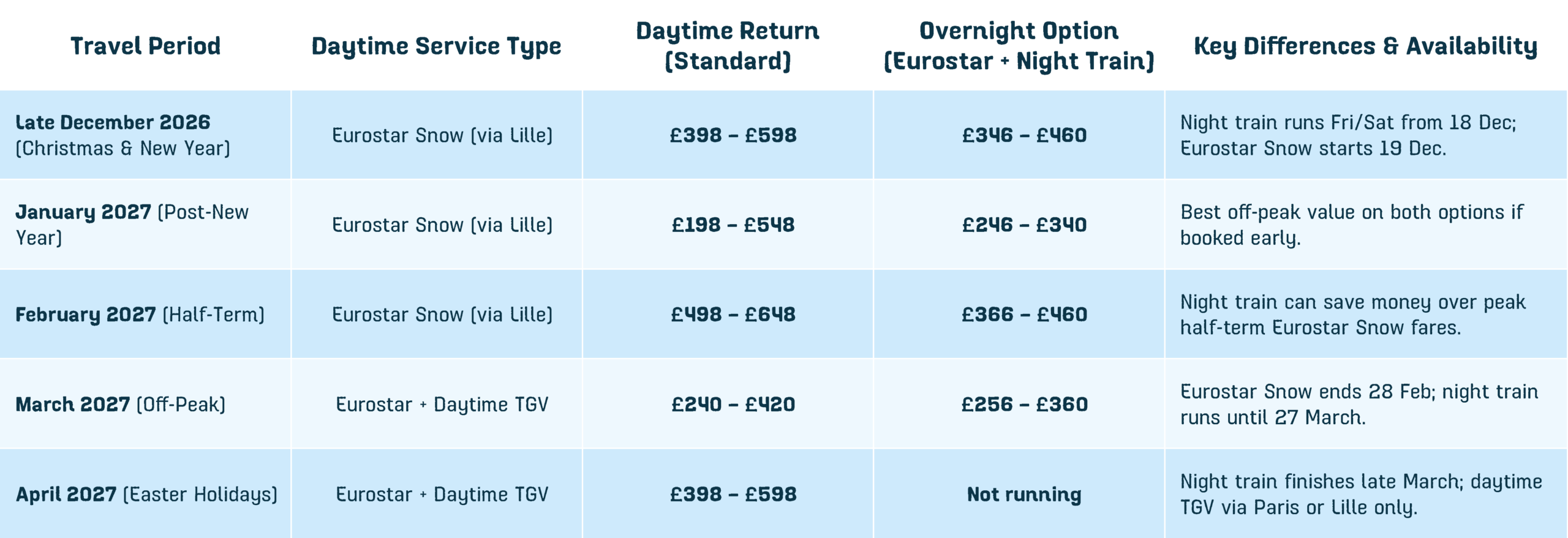
FreeRide Republic: After chatting with Daniel we did some homework of our own looking at adult return costs from London St Pancras to Moûtiers across the 2026/27 ski season. Daytime services range from £198 to £648. Combining Eurostar to Paris with the Travelski Night Express ranges from £246 to £460. We think that stacks up pretty well with flight costs when you add in baggage and airport transfers. Check out our table below for more info (prices correct at time of going to press but don’t quote us):
Which classic FreeRide destinations are particularly well connected? We’re thinking Verbier, St. Anton, Engelberg, Chamonix, La Grave and our home base, Les Trois Vallées.
All of them are accessible by rail. Les Trois Vallées is one of the easiest: Eurostar to Paris, then straight down to Moûtiers.
My personal favourite scenic route is via Paris and Zurich to St. Anton. Passing Lake Zurich and Lake Walen before winding up the Arlberg valley will have your nose permanently glued to the window.
You talk about making the journey part of the holiday. Is that genuinely your experience?
It honestly never falls short. Ski trains are full of like-minded people setting off on an adventure. You get quality time to read, play chess or backgammon or actually talk to your mates. And because you’re not strapped to your seat, you can take a stroll to the café
bar and make new ones.
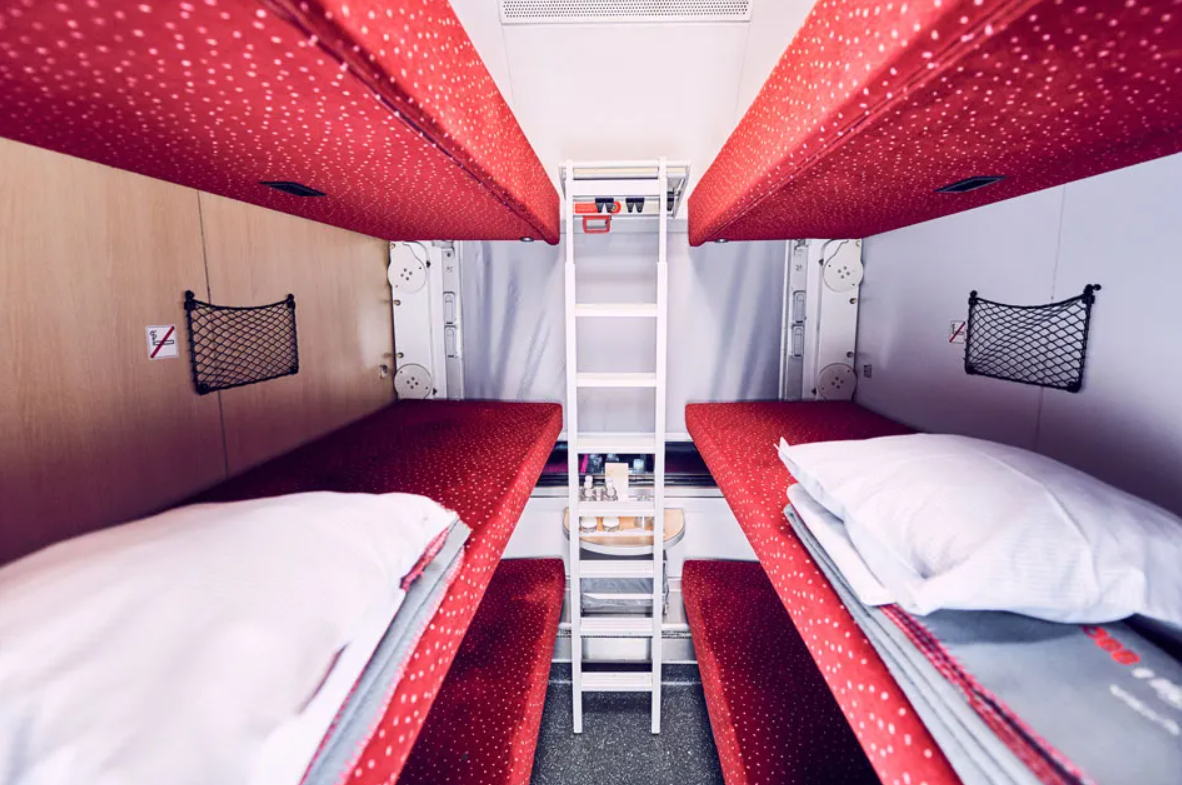
I once took the Travelski Night Express from Paris. After settling into my six-berth cabin which has great retro pull-down windows, I wandered up to the speakeasy-style café bar. They serve drinks and hot food (on real plates), and I met other travellers, all heading for snow-covered mountains. It was a great evening, but I called it around midnight to get some shut-eye. When I wandered back, slightly bleary-eyed, for breakfast the next morning, my new ski buddies were still standing, drinks in hand, right where I’d left them!
Talking of sleeper trains, what are the options?
Alongside Austria’s Nightjet from Brussels or Paris to the Tirol, the standout option is the Travelski Night Express, run by Compagnie des Alpes. It operates overnight from Paris to Bourg-Saint-Maurice and has also added a route from Brussels.
One pro tip on timing: taking a sleeper train out to the Alps gets you into resort ahead of the flying rabble and, if you’re organised, can see you skiing by late morning or lunchtime.
Taking the sleeper train home, however, is unbeatable. Ski a full final day, grab dinner in resort, hop on the train and wake up ready to head home. You gain an entire extra day on the snow that flyers miss out on, and the pistes are largely deserted.
One of the biggest objections we hear is that getting all your gear onto a train is a nightmare. Is it?
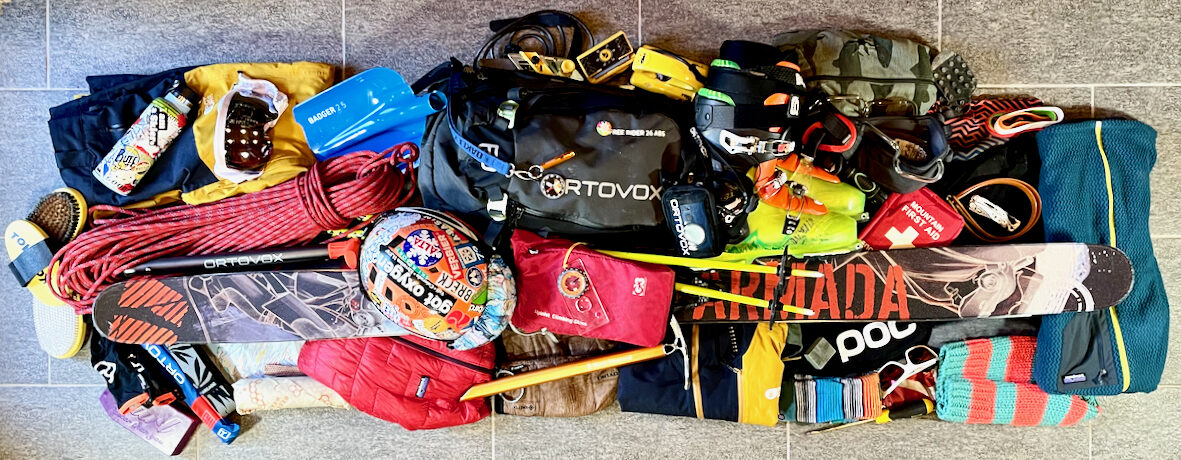
Can you take all your freeride gear, including skis, boots, skins, ice-axe, crampons, avalanche rescue kit, airbag and ice saw?
The short answer is yes, although, just like flying, there are a few prohibited items. You’ll need to leave ice axes and ice saws at home or arrange a specific exemption before travelling.
You can bring an avalanche airbag as long as it uses an electrically operated fan system. If it’s gas operated, leave the cylinder at home and rent one in resort.
FreeRide Republic: Gas operated airbags have pretty much had their day and it’s increasingly difficult to find cylinders for rent in resort. If you’re old skooling a gas bag, check before you travel.
Best of all, there are no airline weight limits, sports-equipment surcharges or hand luggage size restrictions. SNCF technically has a rather weird 130cm length rule for snowboards on TGVs (there’s no limit on skis), but it isn’t enforced. I actually take photos of riders travelling with their boards just to reassure nervous first-timers!
So is the luggage problem largely a myth?
Pretty much. Compared with flying, there’s no check-in desk and no baggage reclaim. Your gear stays with you and, as long as you can carry it, you can bring whatever extras you like.
How does Snow Carbon help travellers navigate the booking process?
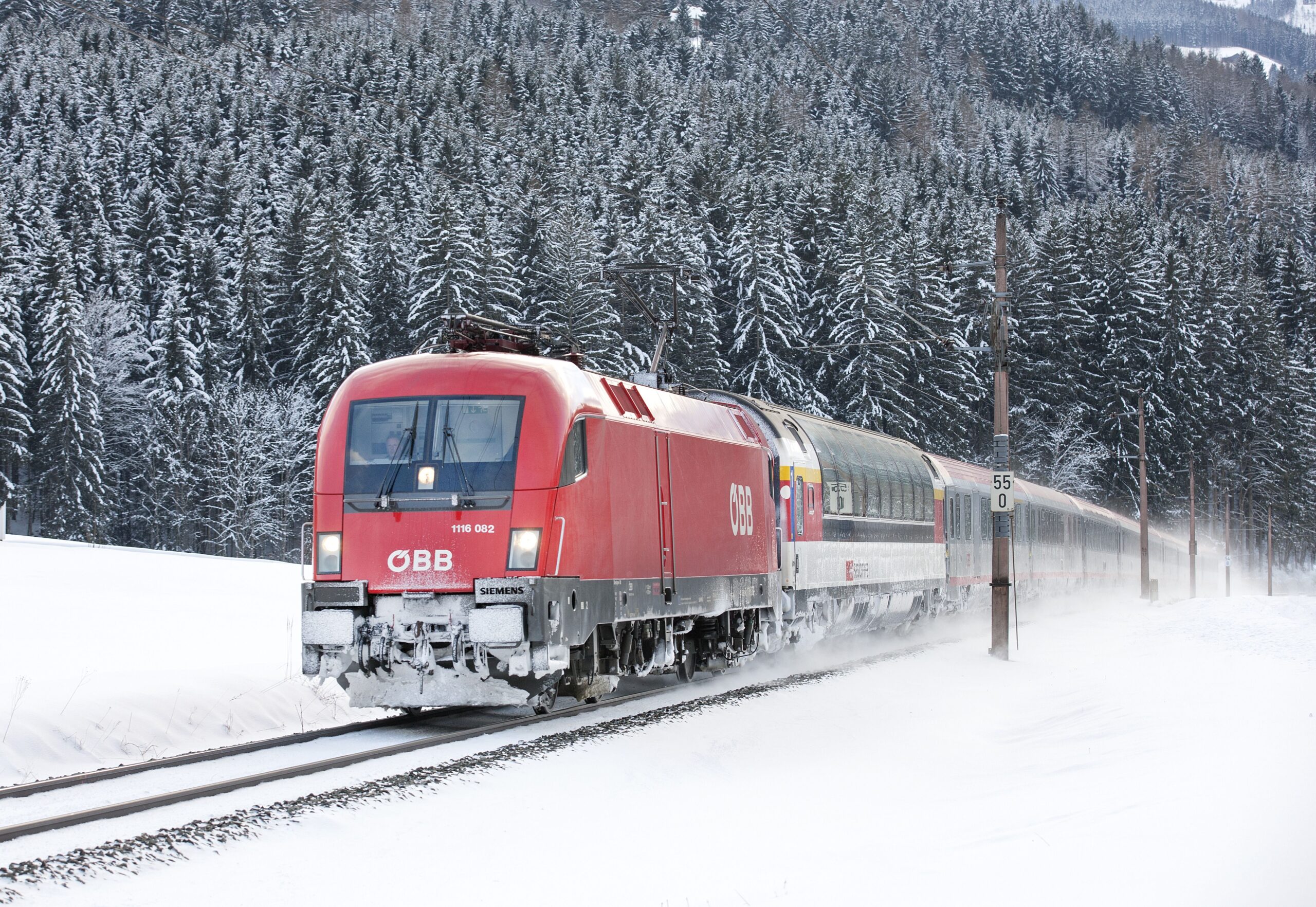
Is it easier to book trains and accommodation separately, or are rail-inclusive ski packages becoming a better option?
It depends on how you like to plan. I often compare it to cooking: decide what kind of meal, or ski trip, you actually want first. Then look for the ingredients. Whether your group needs beginner slopes, lively après or serious off-piste terrain, a chalet,
hotel or apartment, the best thing is to contact me at Snowcarbon to get some initial suggestions.
But you can also browse resorts for your crew first using our Resort Guides and use our Journey Planner to see example, recommended rail schedules. Skiers tell us they love our advisory service. We list independent routes and rail-inclusive packages, recommend accommodation and even hold rail operators accountable when things go wrong. For example, we forced Eurostar to provide proper monetary refunds for skiers after the COVID cancellations, rather than just time-limited vouchers.
Are there resorts that are particularly easy to reach by train but perhaps don’t feature on the radar of British riders who usually fly?
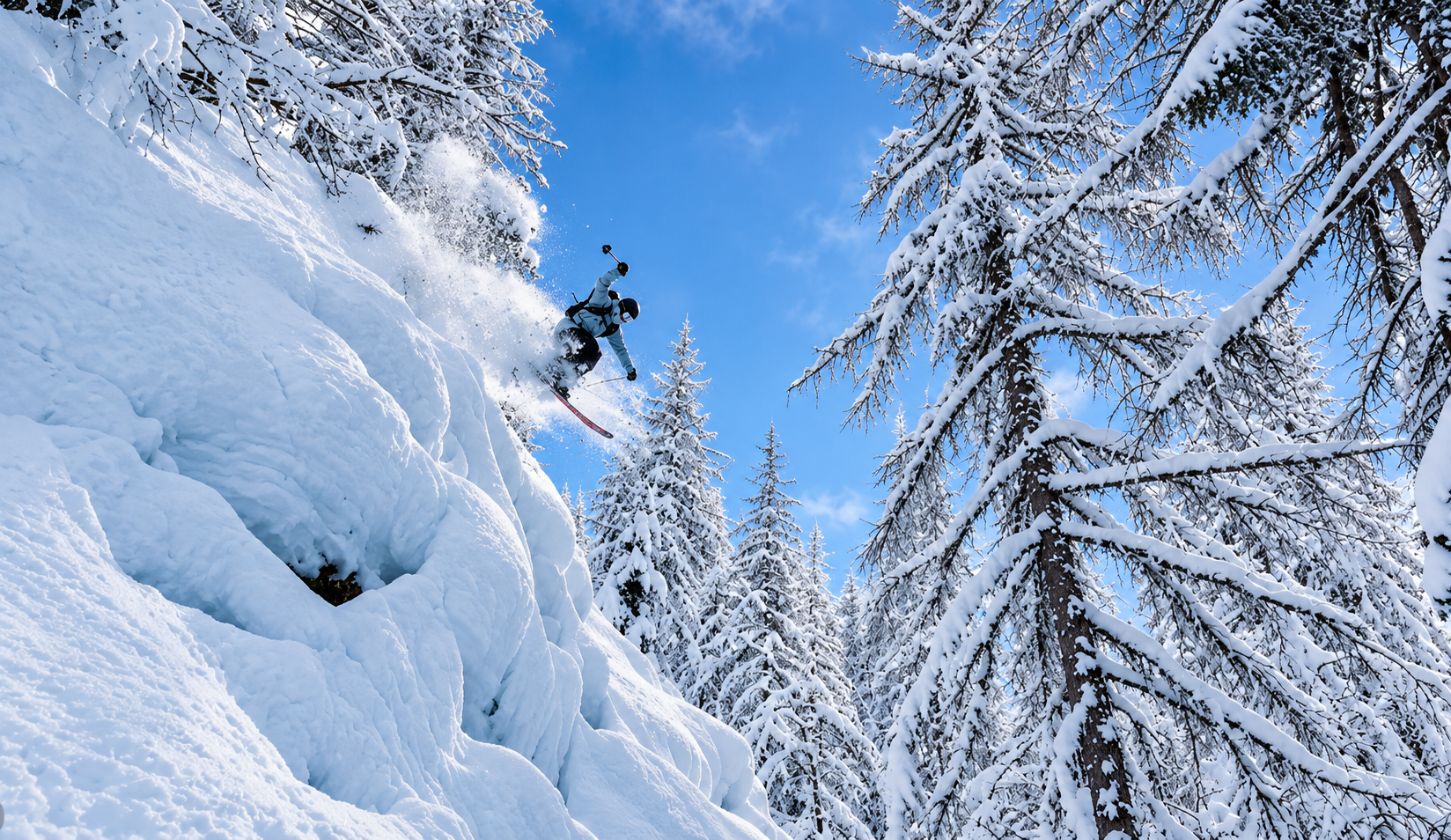
Where should FreeRiders look for hidden rail-accessible gems?
There are some brilliant, slightly smaller resorts with great off-piste that are super-easy to reach by train:
Despite the environmental benefits, train travel still accounts for a relatively small proportion of British ski holidays. Why do you think that is?
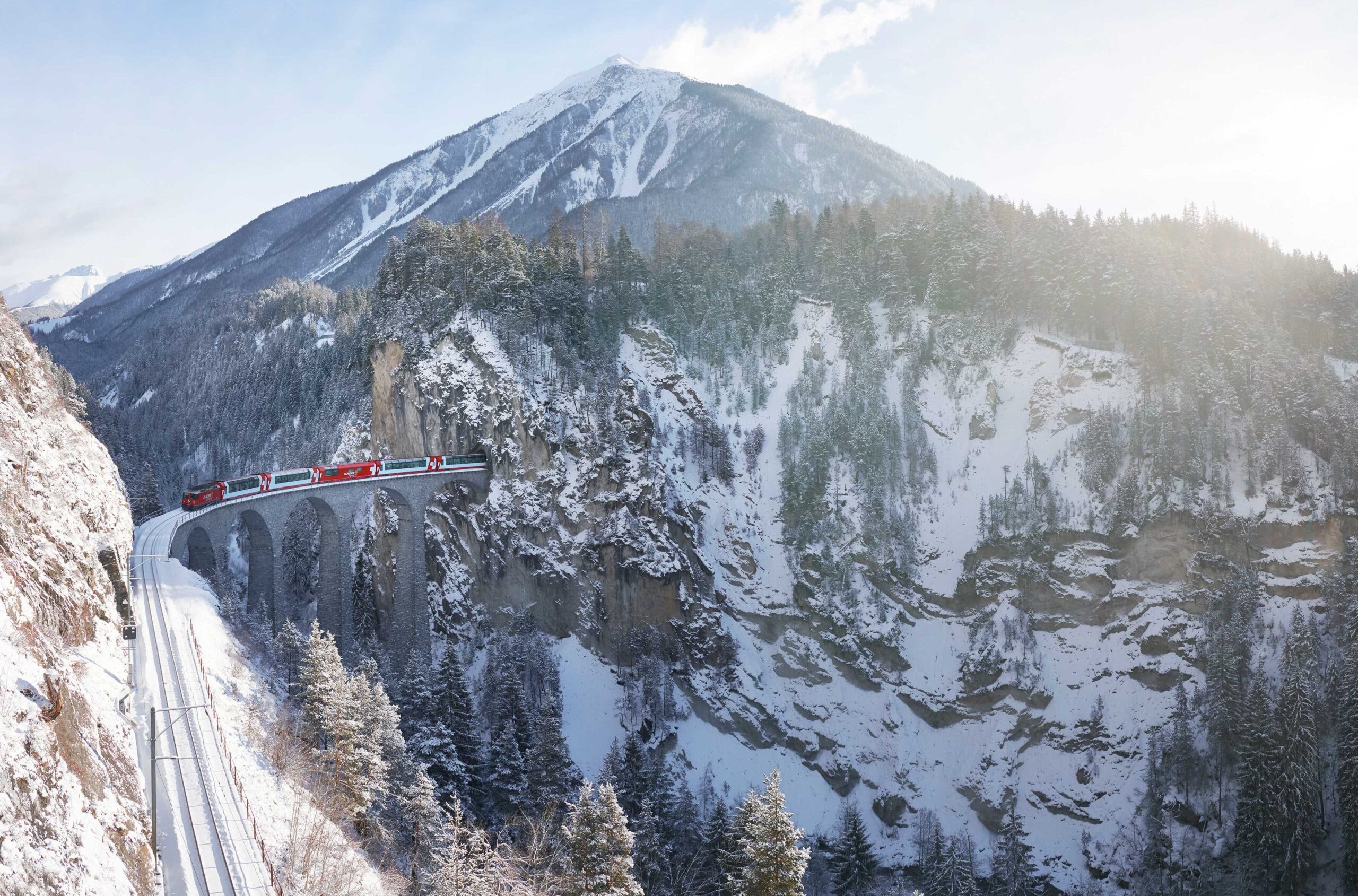
Why don’t more people do it?
It comes down to unfamiliarity and risk aversion within the UK ski industry. People know how airports work, even if they hate them. Changing trains in a foreign city can feel like a step into the unknown and that’s a hard sell for tour operators and travel agents.
If you’re booking a group trip and half your mates are sceptical about the train, my advice is simple: split up. Let the doubters fly and deal with Geneva Airport and skichangeover gridlock on the RN90, while the rest of you enjoy the train journey and meet them on the mountain!
If you could wave a magic wand and make one change to encourage more British riders to travel by train, what would it be?
I’d introduce more connecting trains out of hubs like Lille, Brussels and Paris Nord, so British skiers could make seamless, cross-platform connections straight to the Alps without having to haul their ski bags across Paris.
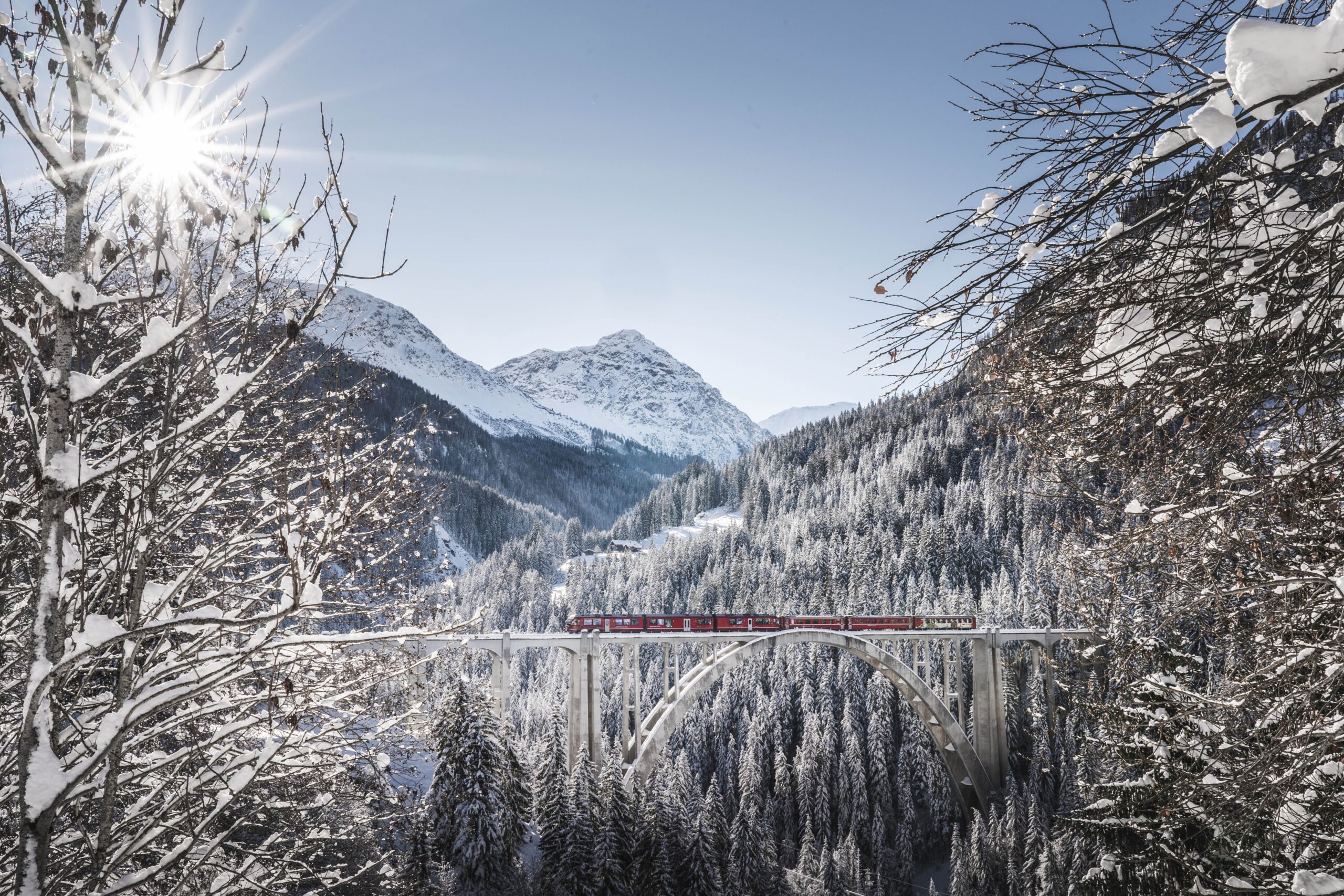
What’s your advice to someone who’s always flown or driven but is curious about trying the train? Where should they start?
Start by picking a straightforward route, like Paris to Moûtiers for les Trois Vallées, or the direct TGV line into Italy. Then use our Journey Planner to map out the connections.
Don’t view the train as a compromise you’re making for the planet. Treat it as the start of your holiday.
FreeRide Republic: It was fascinating talking to Daniel. His passion for the journey is infectious, and his anecdotes genuinely gave us FOMO.
But perhaps the biggest takeaway is that travelling to the mountains by train isn’t simply about finding a more sustainable alternative to flying or driving. It’s about rethinking the journey itself.
It won’t work for every destination, every budget or every trip. But the options are much broader than many of us imagine and, with a little homework, getting to the Alps by train can be a genuinely enjoyable part of the adventure.
So next time you’re planning a trip to the mountains, why not look beyond the airport departures board?
Your next FreeRide Adventure could start long before you boot pack the Brèche de la Portetta.
Explore the themes below to find the best home for the content you want to learn about: