


 How to Perform a Group Transceiver Check
Whenever you and your crew are on the mountain and heading into FreeRide terrain, there’s one step that should always come first: the group transceiver check. It’s fast, it’s simple, and it’s one of the highest-value safety habits you can build. Whether you’re boarding or skiing, bootpacking or skinning, this routine ensures every member of your crew is transmitting properly and capable of switching to search mode.
Avalanche rescue is a race against the clock. If someone gets buried, their transceiver needs to be transmitting correctly — and the rest of the group needs fully functional devices that they can immediately switch to search mode. Batteries fade, harnesses get bumped, and modes can be set incorrectly. A group check eliminates those hiccups before anyone is put at risk.
A solid check takes 2–5 minutes, depending on group size. That tiny investment pays off massively in peace of mind—and in real-world rescue readiness. If your crew is new to the process, practice until the flow becomes natural. The smoother the check, the more likely you’ll actually do it on every mission.
An effective group transceiver check only requires three things:
* It’s worth noting that different manufacturers have different recommendations on when to replace batteries. For example, Ortovox specifies batteries should be replaced when their remaining capacity falls below 50%, Mammut recommends 40%. In some models, Pieps have built residual capacity (20hrs in send and 1 hour in search) into their battery meter reading so that batteries can be replaced when the meter indicates empty. You’ll need to check the instructions on the make and model of the transceiver or just go with the 60% rule, it’s up to you. Batteries are inexpensive (but always buy a quality brand, when it comes to batteries you really do get what you pay for.)
Rogue transceiver signals are just a pain in the ass
It makes sense to do this as early in your day as possible, ideally at your first meeting point, whether that’s lift station, car park, trail head or when leaving a hut. The reason being that this is the most likely place that you’ll be able to resolve any issues e.g. forgotten kit, insufficiently charged batteries etc.
You’ll want an open space free from interference, ideally with a line of sight of about 10-15m from the leader to the group. It’s a good idea to keep your distance from other riders, rogue transceiver signals are just a pain in the ass.
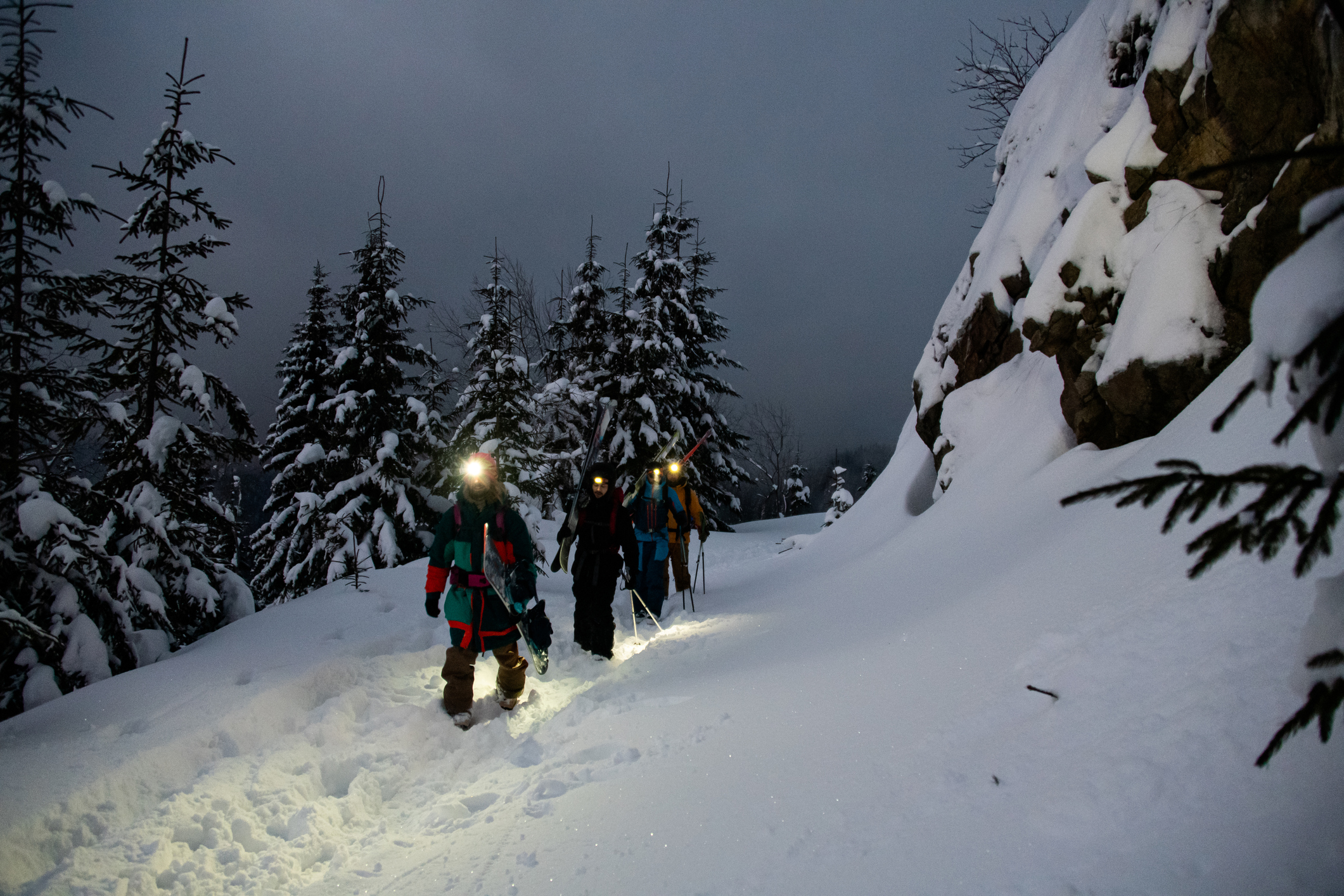
Here’s how to perform an efficient / effective group transceiver check….
Everyone checks that their transceiver is:
Pick one person to run the check from start to finish. This person “the checker” should move away from the group to a distance in line of sight of about 10-15m.
The checker:
The approaching rider continues on past and waits at a distance of around 10-15m
*If a stable signal isn’t found, an investigation is made to confirm the reason, once resolved the rider in question rejoins the group for a retest.
Once everyone’s transmit function is verified:
This step confirms that every device can switch between send and search and functions in both modes — something that surprisingly fails more often than people realise.
After the Checker Transmission Test
A group transceiver check sets the tone for the entire day. It shows your partners you’re serious, skilled, and committed to every rider coming home. It’s one of the simplest habits when riding in FreeRide / unpatrolled terrain and one of the most important. Whatever your FreeRide plans, make the check part of your routine. Your safety system is only as strong as its weakest link—and an efficient / effective group transceiver check strengthens that chain.
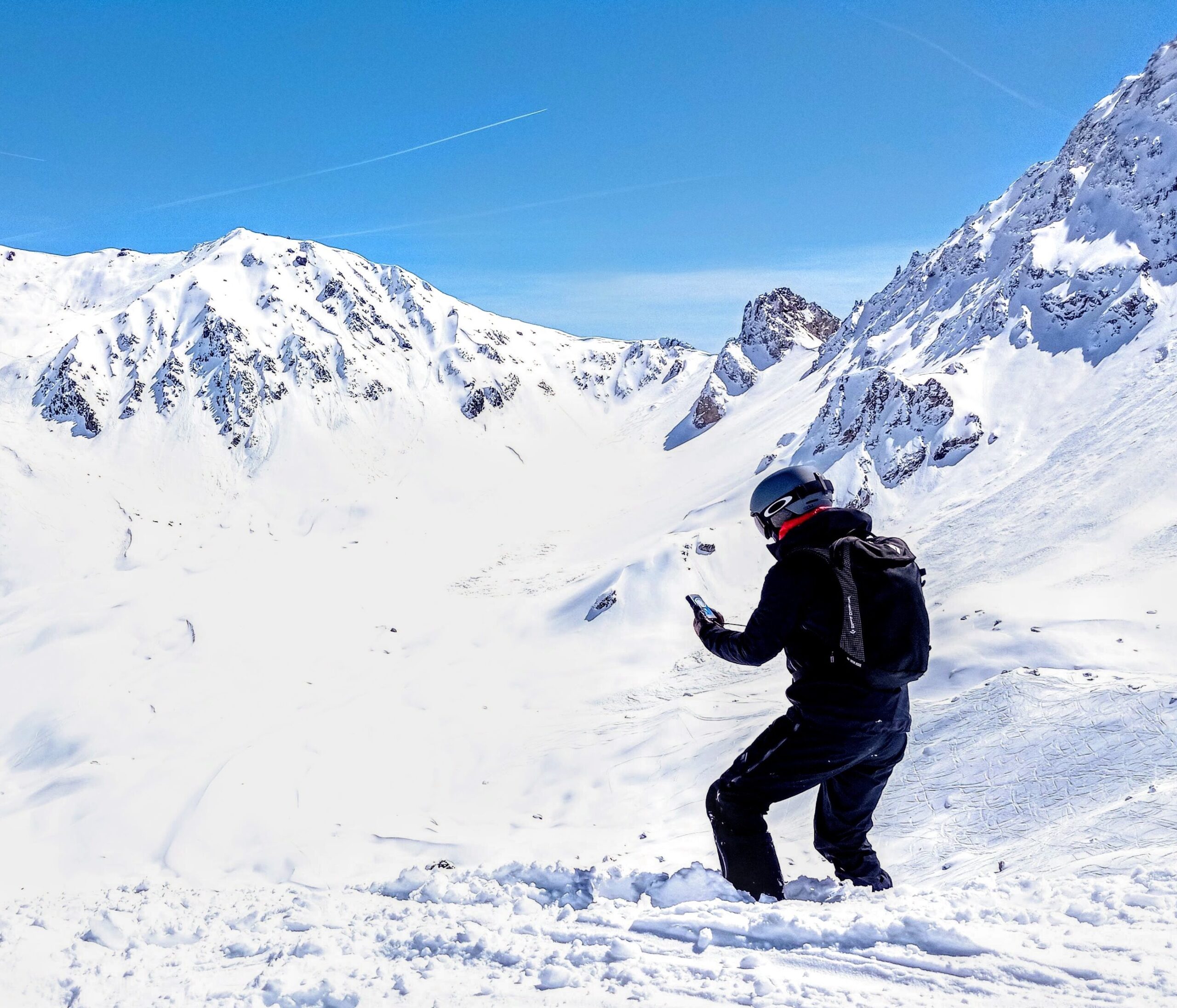
Minimise transmission interference: Keep Phones Out of Pockets with Transceivers — use a chest harness for your beacon and stash your phone in a thigh or hip pocket away or a Faraday pouch. Even on airplane mode, a phone too close to your transceiver can cause signal distortion. Turn off or enable low power mode on other electronic devices or stash them in your backpack. Think action cams, power banks, emergency beacons etc.
Know Your Transceiver’s Functions, the best transceiver is the one you’ve trained and practiced with as different brands / models behave differently. At least know how to:
NB: Practice the above wearing gloves – it may seem like a small point but every second counts in a real life burial.
At the end of your group check take a moment for a few quick reminders / set expectations for the day:
There’s a load more avalanche safety info to get into here. Alternatively why not join one of our FREE Avalanche Rescue Practice Sessions.
We’ll See You Up There.
Explore the themes below to find the best home for the content you want to learn about: