

 Split Boarding Transitions: Skins -> Board
This step-by-step guide covers the split boarding transition from travelling uphill on skins to being fully set up for the descent on your board. Efficient transitions reduce risk, save time, and keep your crew moving — especially when space is tight and conditions are less than friendly.
During the final minutes of your ascent, start looking for the best place to transition back to your board. The steeper or more technical the descent, the less space you’re likely to have — so assume your options will be limited.
As options may be limited, you may find yourself taking additional risk here than the transition you made to skins (See article Split Boarding Transitions: Board -> Skins). That said, still think about finding a spot that avoids avalanche danger, offers some protection from the elements and where if possible it’s safe to move around.
The tighter the space the more important it is to be clear about your process. The consequence of dropping kit at the top of a couloir or on a ridge line is in a different league from the typical transition at the base of an ascent.
Know what order you are going to make the transition and where your kit is being stowed.
Once you’ve manoeuvred into position, stay on your skis. Remove your poles and backpack and secure them above you, within easy reach. Everything in your pack is critical at this point, so slow down and make sure nothing can slide away.
You’ll cool down fast once you stop. Even if you feel hot from the climb, make warmth the priority. Replace any layers you’ve shed, close pit zips, and ensure your transceiver sits between your outermost base layer and your shell.
Remove your skis and stow your skins using whatever system works for you — folding, rolling, cheat sheets or not. What matters is that you can do it quickly, without exposing glue to snow or wind, and get them securely into your pack or jacket.
Remove your bindings, slide and clip your board back together and reinstall your bindings in downhill mode. Then stash your board securely. How you do this will depend on space you have. Ideally you’ll be able to stow it vertically in the snow but you might well find that the only practical option is to lay it in the snow. Do whatever you can to make it as secure as possible.
Swap your hat for your helmet, change from contact gloves to riding mitts, zip up your pack, and do a final check that all kit is stowed before putting your pack back on.
Getting back into your bindings is often the trickiest part. Limited space, steep terrain and deep snow don’t make it easy. Take your time, position your board as securely as possible, step into your bindings and ratchet up your straps.
Before dropping in, check in with your crew. Reassess conditions, agree on risk, confirm your drop order, and make sure everyone is ready. Once that’s done, it’s time to ride.
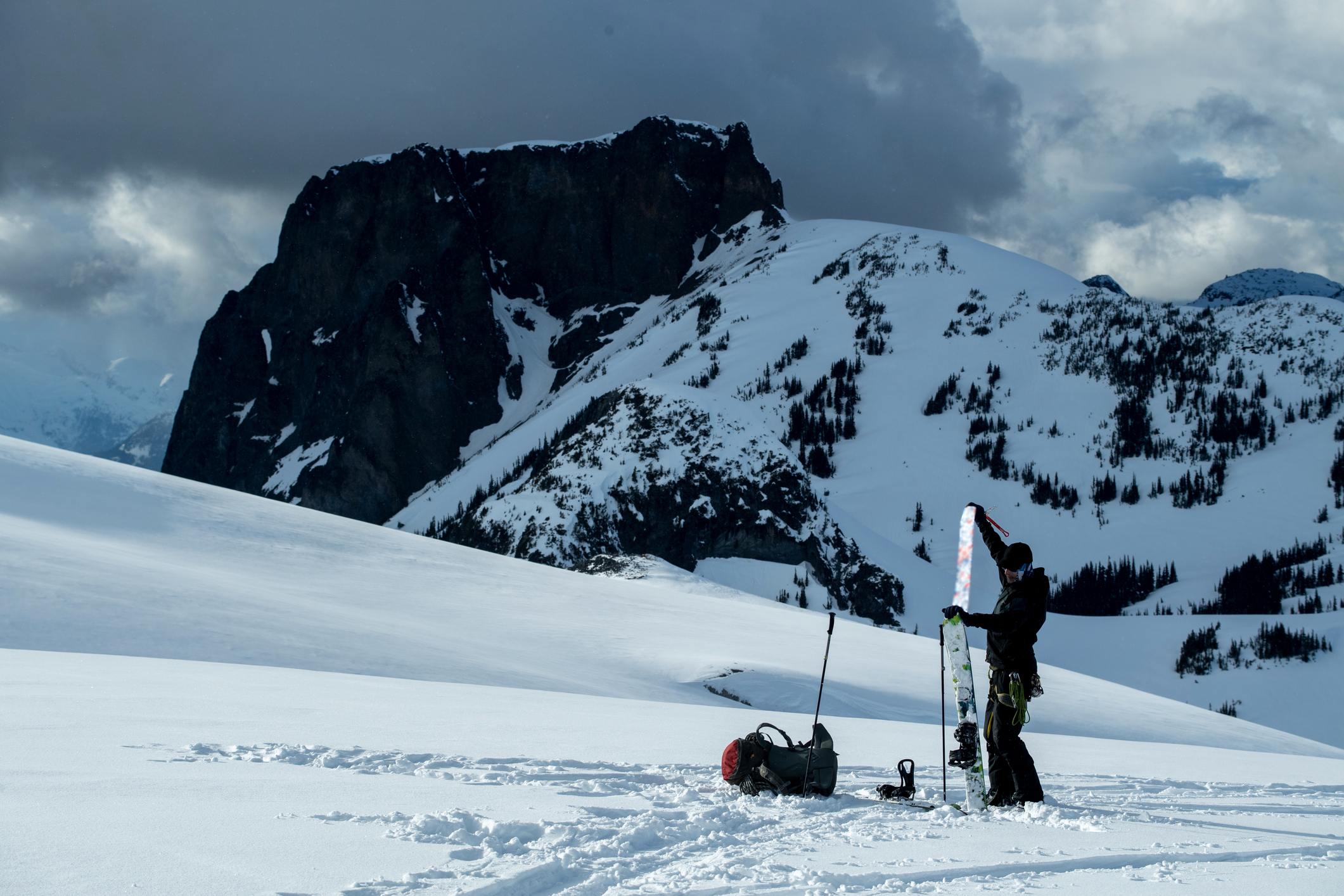
Keeping this kit easy to access will make every transition faster, warmer, and far less stressful.
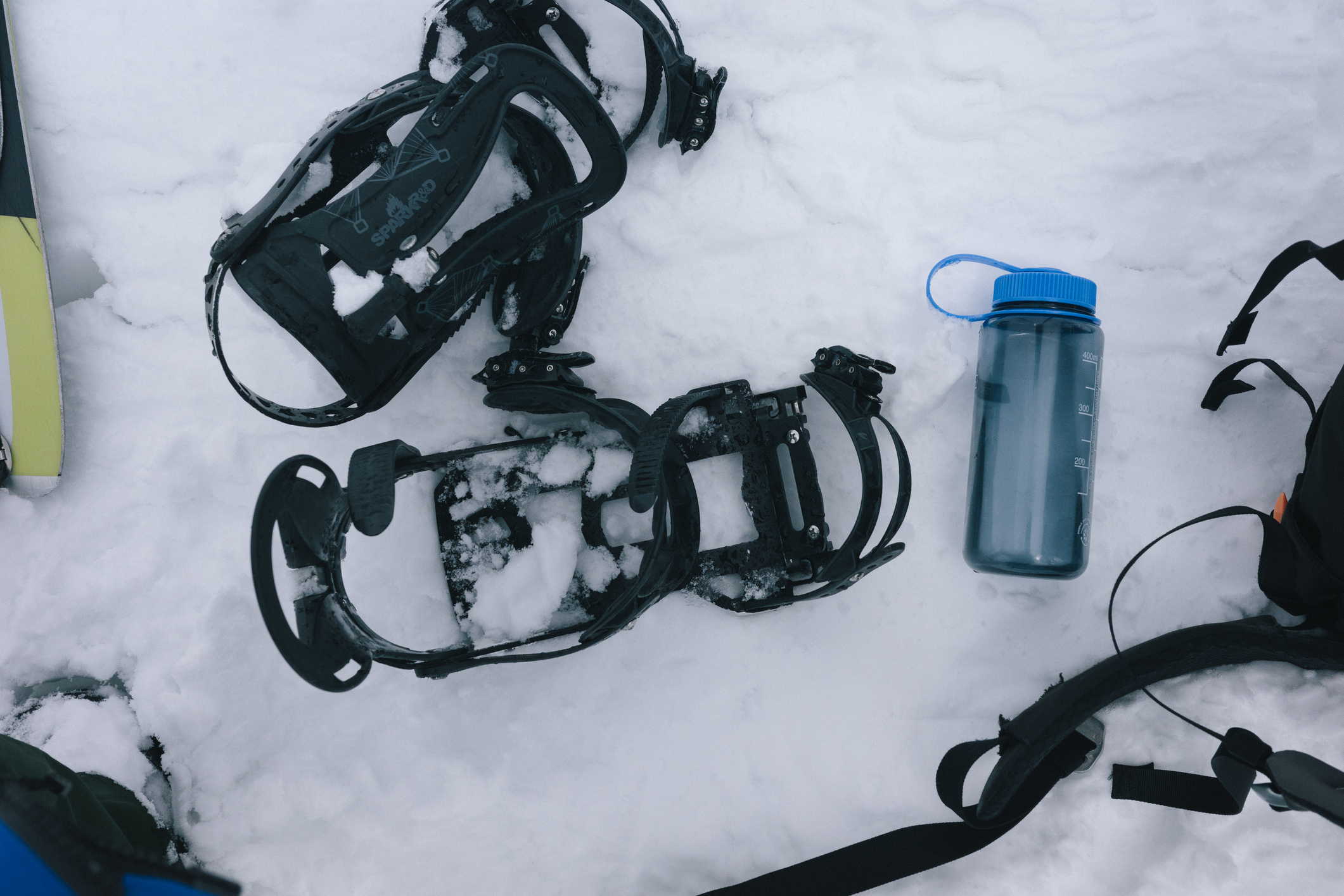
Other transitions can be found in our Transitions Hub.
We’ll see you up there.
Explore the themes below to find the best home for the content you want to learn about: