

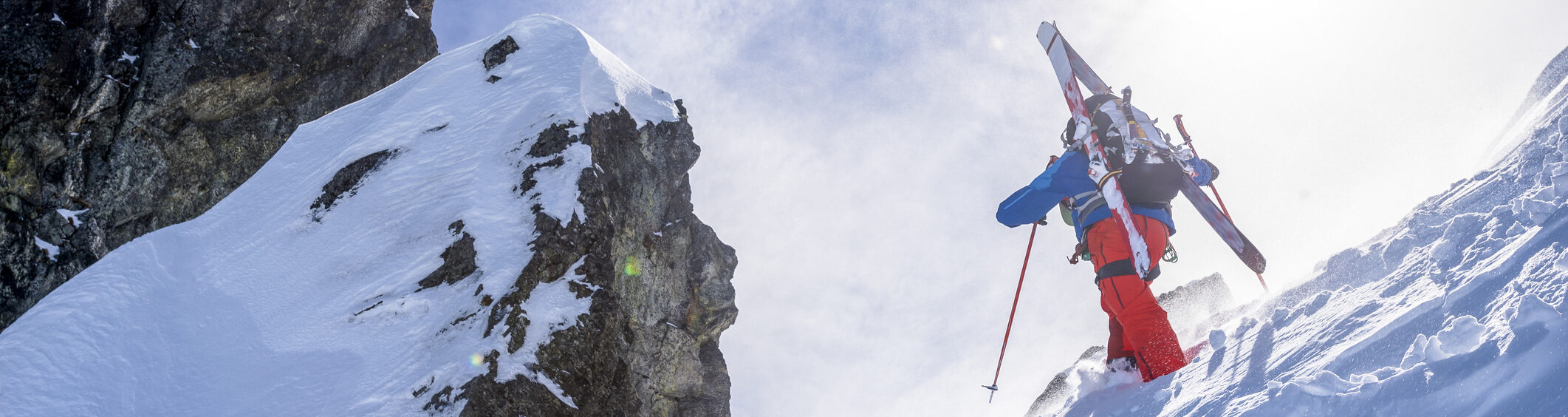
 Ski Touring Transitions: Boots -> Planks
Transitions are one of the most overlooked skills in split-boarding and ski touring. This step-by-step guide covers the ski touring transition from bootpacking to riding your downhill setup. Efficient transitions reduce risk, keep your crew moving, and stop you haemorrhaging heat while you’re static in exposed terrain.
During the final minutes of your ascent, start actively looking for the best place to transition back to planks.
In general, the more technical the descent, the less safe space you’ll have to work with. Ideally, find an area where you can place the full length of your skis in the snow. If needed, tread out or flatten a small platform to create a stable working area.
Transitions can be done in tight spaces, but more room means fewer mistakes.
Options may be limited, and you may be forced to accept more risk than during your transition before the ascent (see Planks -> Boots).
Even so, prioritise:
If you’re not happy standing there for five minutes, it’s probably not the right spot.
The tighter the terrain, the more important your process becomes.
Dropping a glove at the top of a couloir or losing a ski from a ridgeline is a very different problem to fumbling kit at the base of a climb. Before you start, be clear on:
Know your order and stick to it.
A consistent transition routine reduces mistakes, speeds things up, and frees mental capacity for decision-making. This is one of those moments where being slightly obsessive is a good thing.
Once you’ve manoeuvred into position:
The contents of your pack are critical. Treat this step with full attention — not as an afterthought.
Even if you feel hot from the climb, you’ll cool rapidly once static. Prioritise warmth:
Cold hands lead to challenging transitions, so wearing contact gloves until you’re ready to put your riding gloves on makes sense.
Assuming your planks are attached to your pack, remove them and store them securely in the snow. Ideally you’ll be able to place them securely vertically in the snow whilst you take care of the other matters. It maybe that the only practical option is to lay them in the snow. Do whatever you can to make them as secure as possible, not solely relying on the ski brake to stop them careering away from you.
Now complete the swap:
This is a good moment for a quick self-check before committing.
Often the trickiest part.
Limited space, deep snow, and awkward angles don’t make clicking in easy. Position your planks as securely as possible, take your time, and click into your downhill ski first.
Before you go:
Then commit — if conditions dictate then one rider at a time.
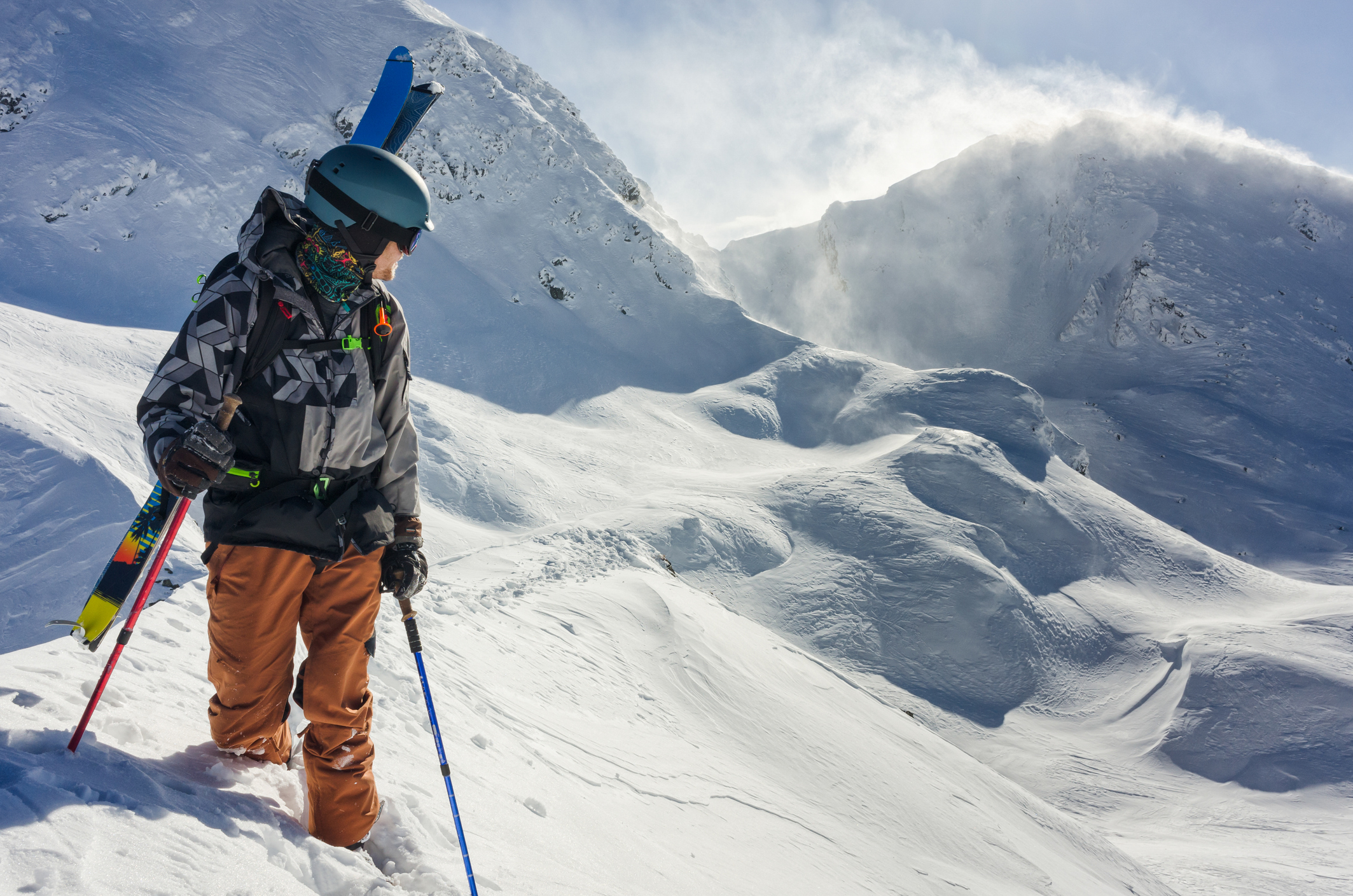
Keeping this kit easy to access will make every transition faster, warmer, and far less stressful.
Other transitions can be found in our Transitions Hub.
We’ll see you up there.
Explore the themes below to find the best home for the content you want to learn about: